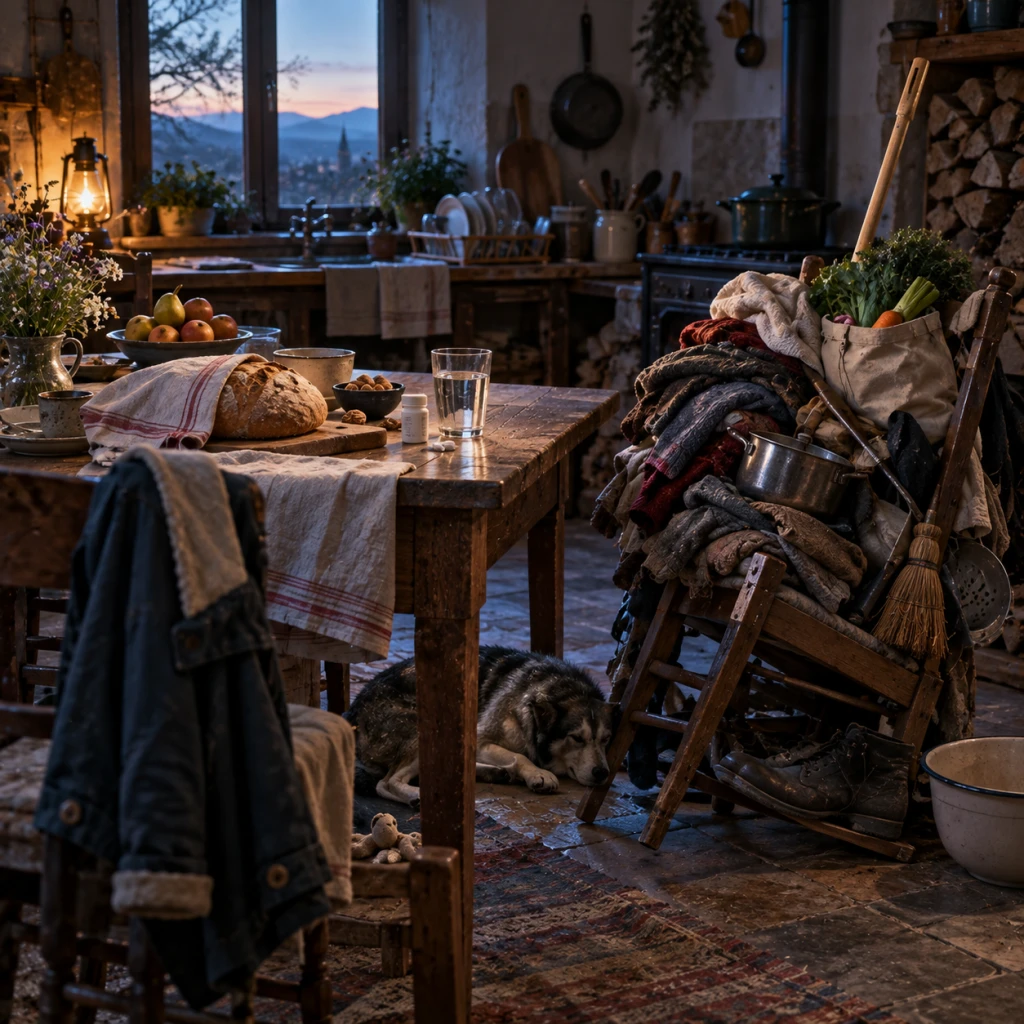
A meal appears. Medicine is remembered. The room becomes calm before anyone asks why it was tense. Someone is often holding these details together.
Care is rarely one dramatic act. It is repeated maintenance. Because it prevents disruption, success can look like nothing happened. The work disappears into ordinary life, and the person doing it can disappear with it.
Over time, continuous responsibility can keep the body prepared for the next need. Rest becomes shallow. Muscles remain tense after the tasks are finished. Fatigue is then mistaken for weakness, poor character, or insufficient love. It may simply be the cost of remaining available for too long.
The problem is not devotion. It is a structure in which one person becomes the household’s default memory, monitor, and reserve. Others need not be cruel for this to happen. An unnamed burden is easy to overlook.
Make the pattern visible. List the recurring work. Decide who owns each task. Define when the person carrying care is no longer on duty. Agree on what happens when they are unavailable. These are not administrative details. They allow care to become shared reality instead of private endurance.
Rest is not payment for completing all care. Care is never completely finished. Rest is part of the structure that keeps devotion from consuming the person who gives it.
A home remains human when the person holding it together is allowed to remain a whole person inside it.