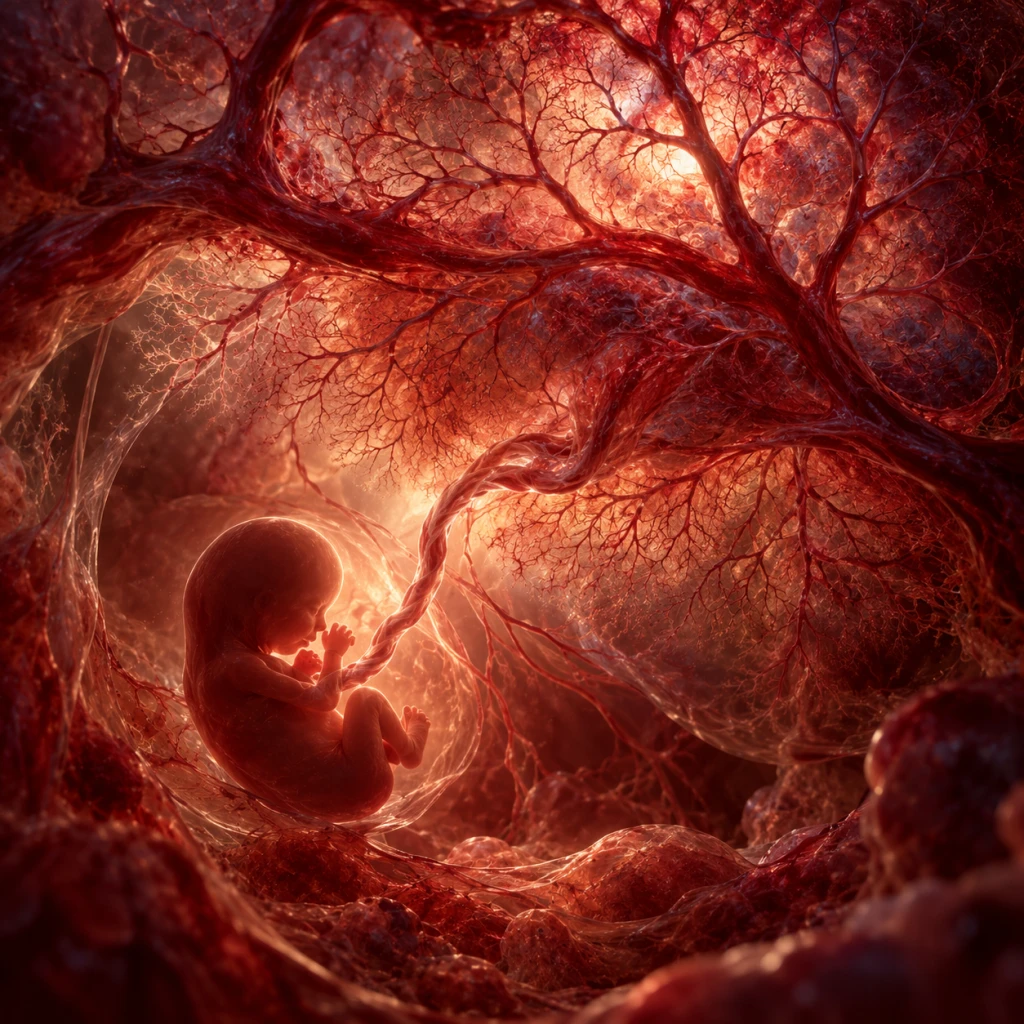
A child does not begin from an empty page.
Before language or memory, a developing body depends on another body for oxygen and nutrients. Maternal anaemia can reduce iron availability and oxygen delivery during pregnancy, increasing risks to fetal growth and neurodevelopment.
This is not destiny. Timing, severity, treatment, genetics, later care, and many other conditions shape what follows. No adult difficulty can be traced to a prenatal deficit by assumption. But neither does every person arrive with an identical biological baseline.
Biology begins in relationship.
That recognition can soften punitive self-judgment. Struggles with energy, attention, learning, or emotional regulation are not proof of weak character. Their causes may include conditions a person never chose, even when the exact history remains unknowable. Patience can make room for that possibility without turning it into a diagnosis.
The same recognition changes what society owes pregnancy. Nutritious food, anaemia screening and treatment, rest, and accessible prenatal care are not private luxuries. When poverty, overwork, or inaccessible care deplete the body carrying a pregnancy, social conditions can become biological burdens.
Care before birth cannot guarantee an easy life. It can protect the ground from which a life begins.