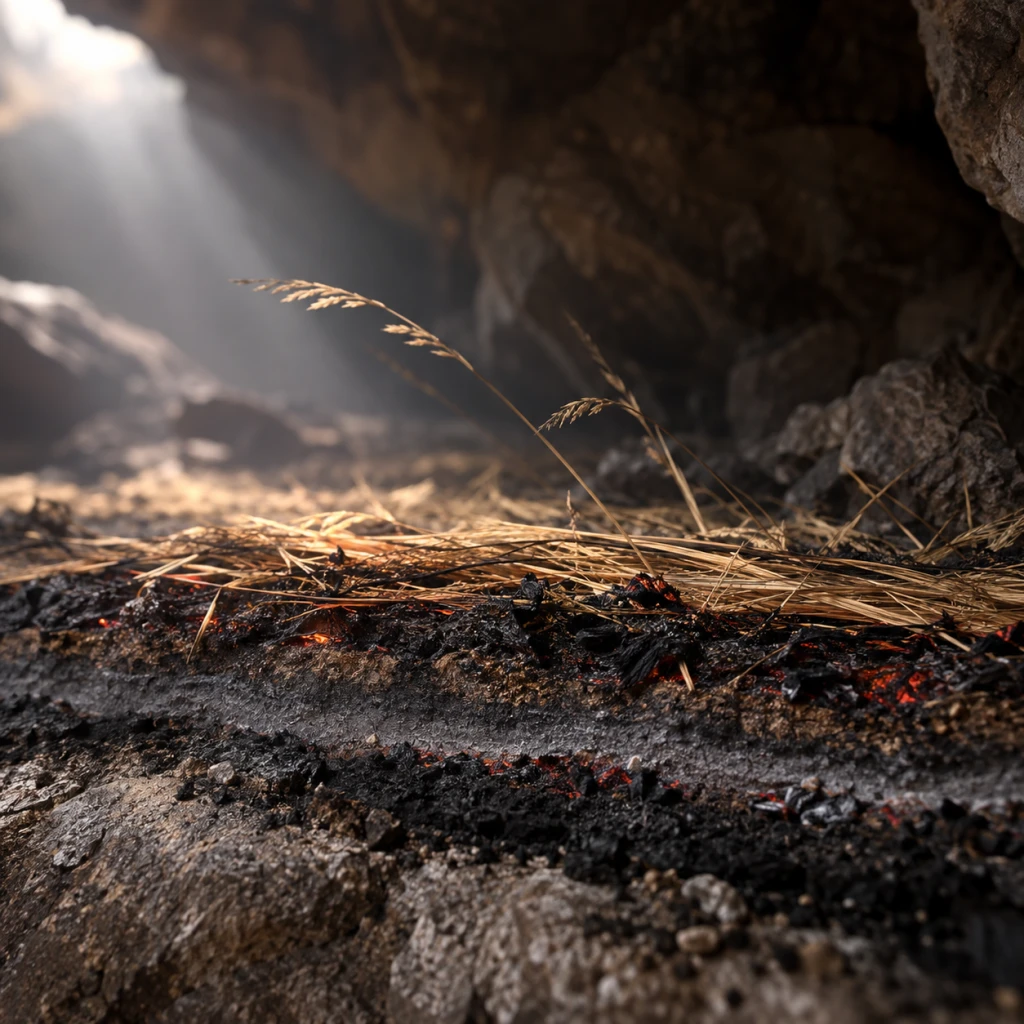
At Cloggs Cave, people carried whole grasses into darkness and burned them in thin layers. Microscopic plant remains preserve this recurring act across deposits spanning roughly 25,000 years. A standing stone appears to have served as an anchor. The exact meaning held by every generation is beyond recovery, but the pattern points to ritual continuity on an extraordinary timescale.
We often confuse material mass with durable meaning. A monument can outlast its builders yet lose the practice that gave it purpose. A nearly weightless act can do the opposite: survive because people keep returning to it.
That distinction matters beyond archaeology. Archives, institutions, and infrastructure can support continuity, but they cannot replace living participation. When a central structure weakens, a purpose is more likely to survive if people still know the gesture.
If something must endure, make its essential practice possible without ideal conditions. Keep it simple enough to repeat during disruption. Give it a physical anchor. Teach the next person.
Continuity is not secured by what one generation builds. It lives in what another generation can perform again.