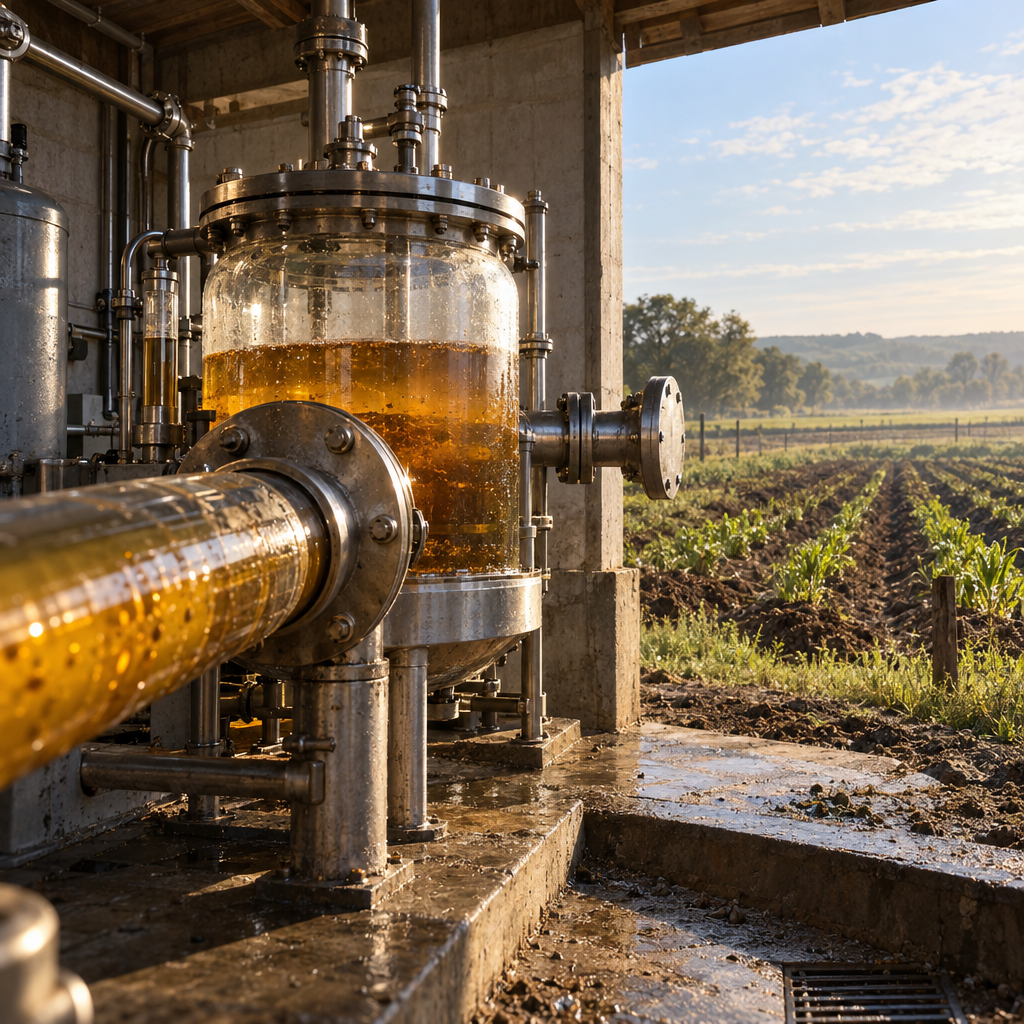
Food enters the body. Some of its nitrogen and phosphorus eventually leave in urine.
Cropland requires those same elements. Yet common sewer design mixes urine with feces, wash water, chemicals, and large volumes of water. Once diluted and contaminated, its nutrients become harder to recover. Treatment plants may remove nitrogen, retain phosphorus in sludge, or recover a portion of either. Agriculture then obtains new fertilizer elsewhere.
Imagine a district designed around the opposite decision. Separate collection keeps urine concentrated. A local facility stabilizes it, tests it, manages contaminants, and produces fertilizer with known nutrient content. Where crops, infrastructure, transport, and law allow, the nutrients return to soil.
This is not permission to pour untreated urine onto food crops. Medicines, excess salts, fecal contamination, storage, handling, and local agricultural conditions matter. Separation creates a possibility, not purity.
The field and the toilet are already connected by human metabolism. Plumbing helps decide whether that connection becomes a recoverable cycle or a disposal route.