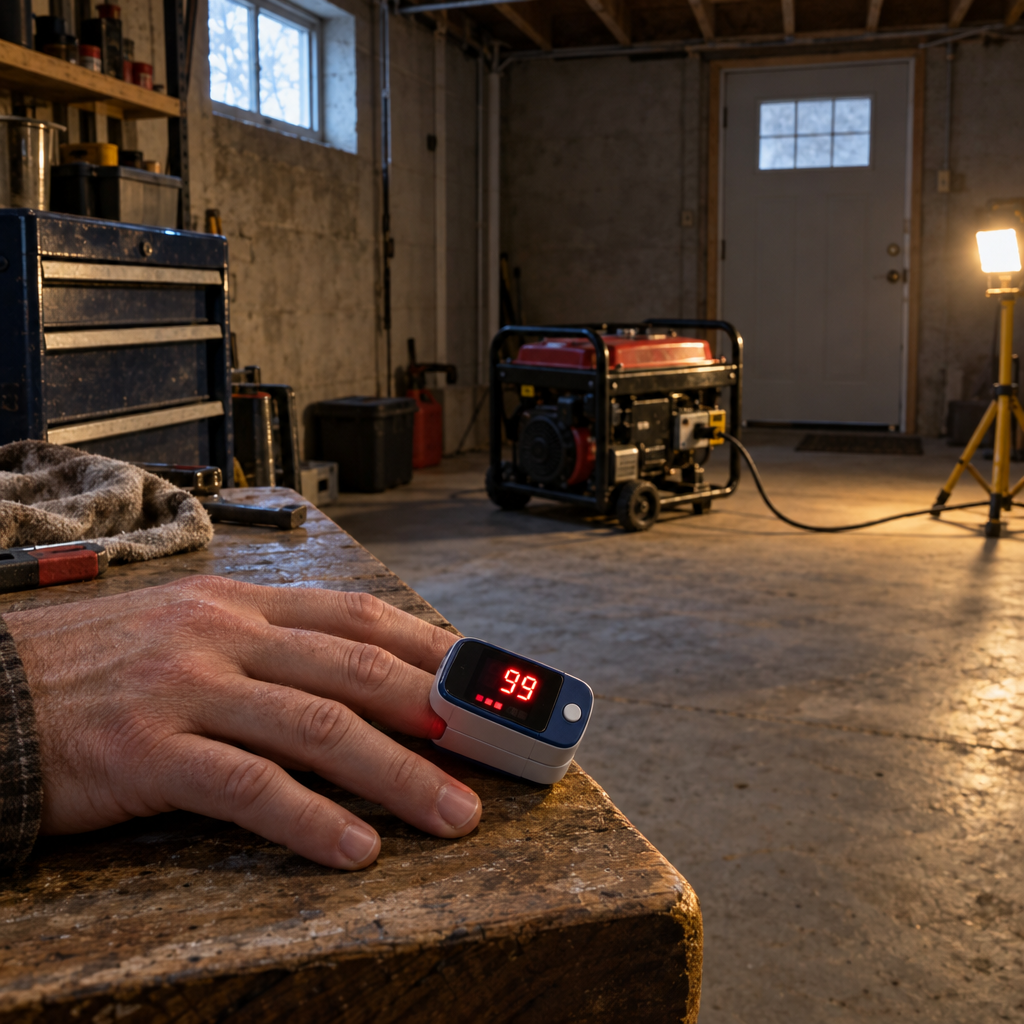
A pulse oximeter clips to a finger, flashes a number, and can seem to settle the question. With carbon monoxide, it cannot.
Standard pulse oximeters use two wavelengths of light. They cannot reliably distinguish oxyhemoglobin—hemoglobin carrying oxygen—from carboxyhemoglobin, formed when carbon monoxide binds to hemoglobin. The displayed oxygen saturation may therefore remain normal or high even when carbon monoxide poisoning is present.
This does not mean the reading diagnoses poisoning. It means the reading cannot exclude it.
If carbon monoxide exposure is suspected, the pulse-oximeter number should not be used to dismiss the concern. Clinical evaluation and appropriate confirmatory testing are still needed.