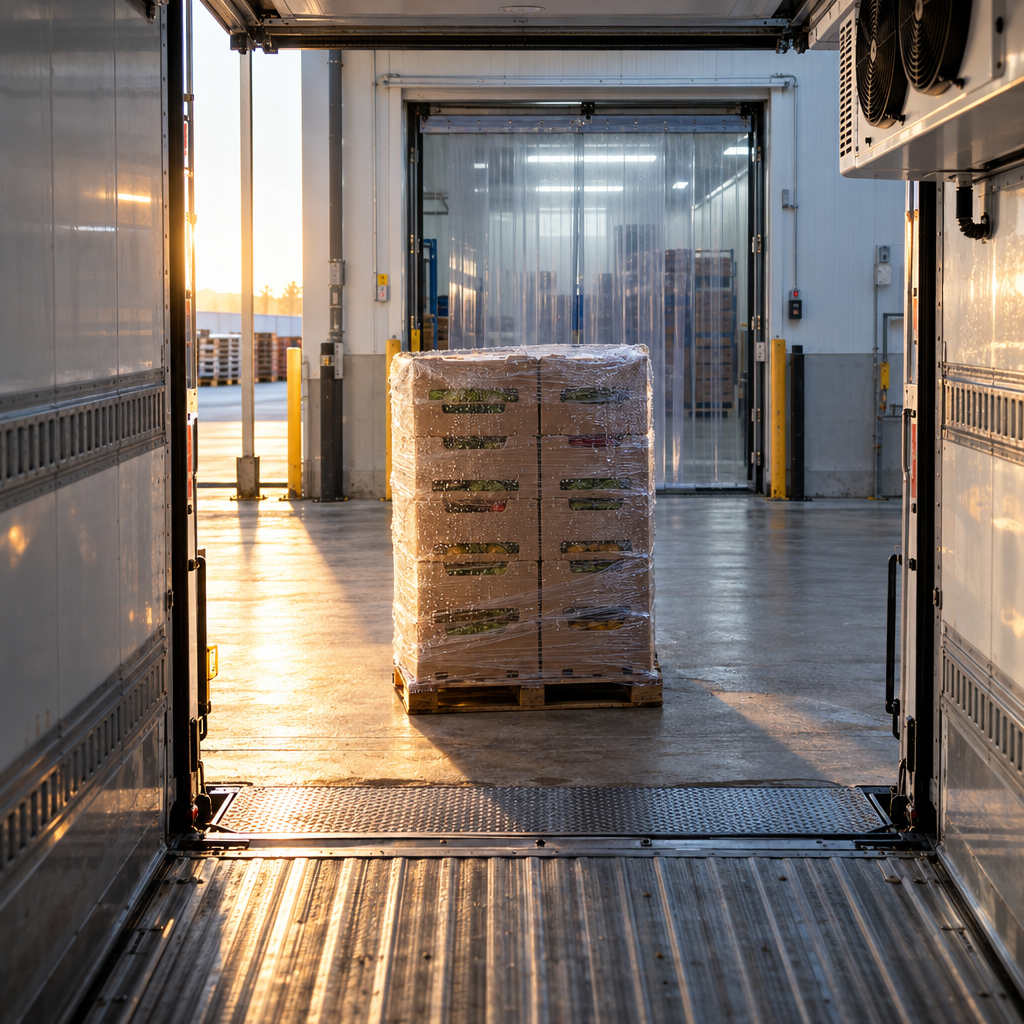
When a refrigerated pallet waits at a loading bay, the map records no new distance. Its time-temperature exposure can still rise.
For perishable food, distance is an incomplete measure of the journey. Spoilage often depends more on the temperatures encountered and how long the food remains at them. A long route kept consistently cool can preserve food better than a shorter route interrupted by warm storage or avoidable waiting.
This changes where waste can be prevented. If geography fixes the route, exposure can still be reduced: keep cooling continuous and shorten idle periods during storage, transfer and delivery. The meaningful gain may be not kilometres removed, but delay removed.
This is a general relationship, not a universal formula. Outcomes vary by food, packaging and handling conditions. Distance can still matter when it adds time or makes cooling harder. But the map alone cannot tell us what the food endured.