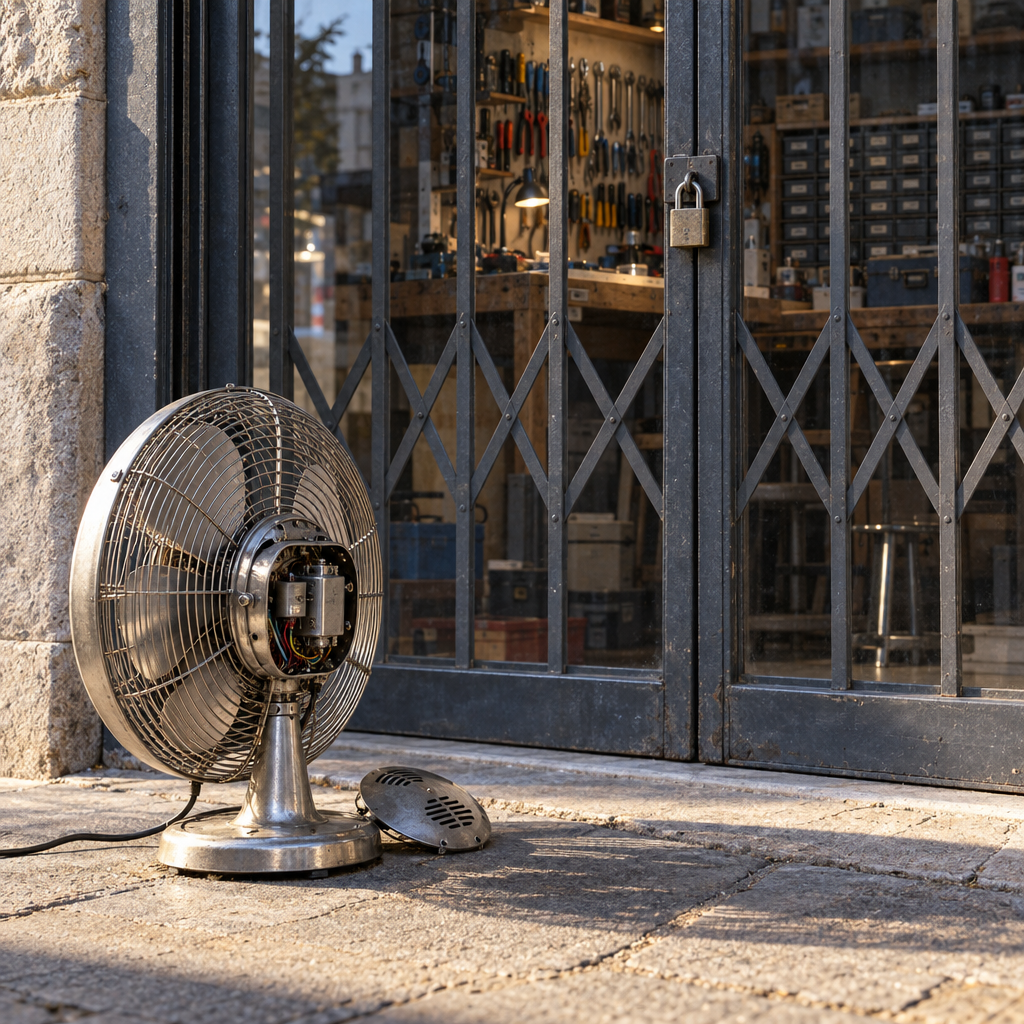
A component fails. The product around it may remain physically sound, but durability alone cannot recover its remaining life.
For repair to happen, someone must be able to reach the component, determine what failed, obtain a compatible replacement, use the necessary tools, spend the required time, and legally perform the work. Repairability exists in the relationship among those conditions.
A durable enclosure cannot supply missing diagnostic information. An accessible component is of little use when no compatible part is available. Parts and knowledge cannot help when the necessary tool is unavailable, the work takes more time than circumstances allow, or permission is withheld.
Remove one critical link and a product that could continue working can become practically disposable. Which link proves decisive varies by product and context: physical access in one case, information, parts, tools, time, or legal permission in another.
Repairability cannot be located entirely inside the object. The object can outlast its path back to use.