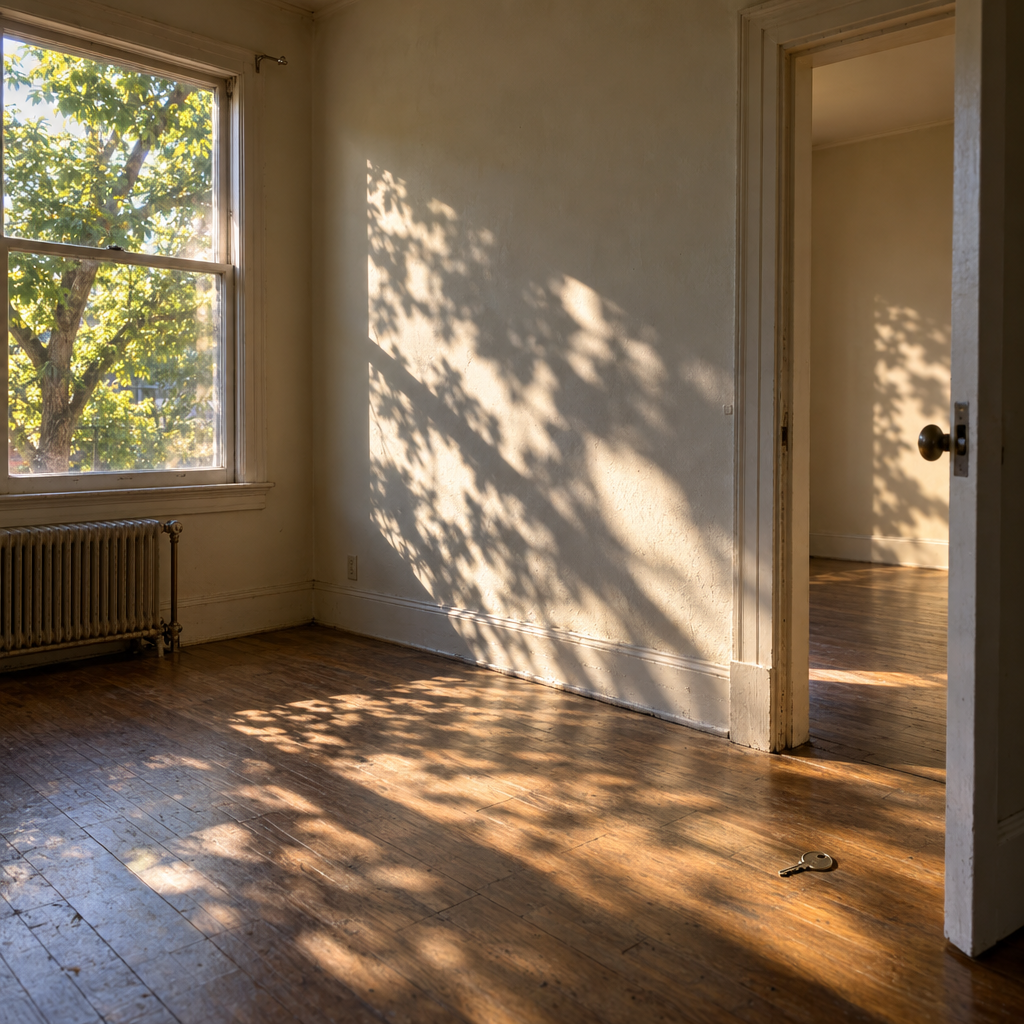
A street tree shades a window. A pocket park replaces heat-storing pavement. As canopy and planted ground expand, a block can become less punishing during hot weather. Urban greening can lower local heat exposure; that is one reason cities invest in it.
The same improvement can change what the housing market sees. New greenery may make a neighborhood more desirable. If more households compete for limited homes, housing pressure can rise. Where residents already face insecure tenure or have little room in their budgets, that pressure may contribute to displacement.
Pressure is not displacement by itself, and a new park does not automatically evict anyone. Accumulated research supports this chain as a risk, not a forecast for every project. The size of the effects and the route between them remain unknown in any particular neighborhood. No live or location-specific observation is available here to show whether rising demand, changing rents, redevelopment or another mechanism is operating on a given block.
For a resident, displacement is not an abstract tradeoff between temperature and property values. It can mean leaving a home, daily routines, neighbors and nearby care. A greening project may succeed as heat mitigation while failing some of the people it was intended to protect. A cooler block cannot protect someone who can no longer afford to remain there.
Where vulnerability to displacement is high, housing protection cannot wait until after the trees are planted. Greening can be paired from the start with measures that preserve affordable homes and strengthen housing stability, while local housing pressure is monitored as investment arrives. The appropriate protections depend on local law, tenure and conditions; the general evidence does not provide one universal package.
Planting and housing policy may occupy separate offices, but residents experience one neighborhood. For the intended beneficiaries, the shade becomes adaptation only if they can still live within reach of it.