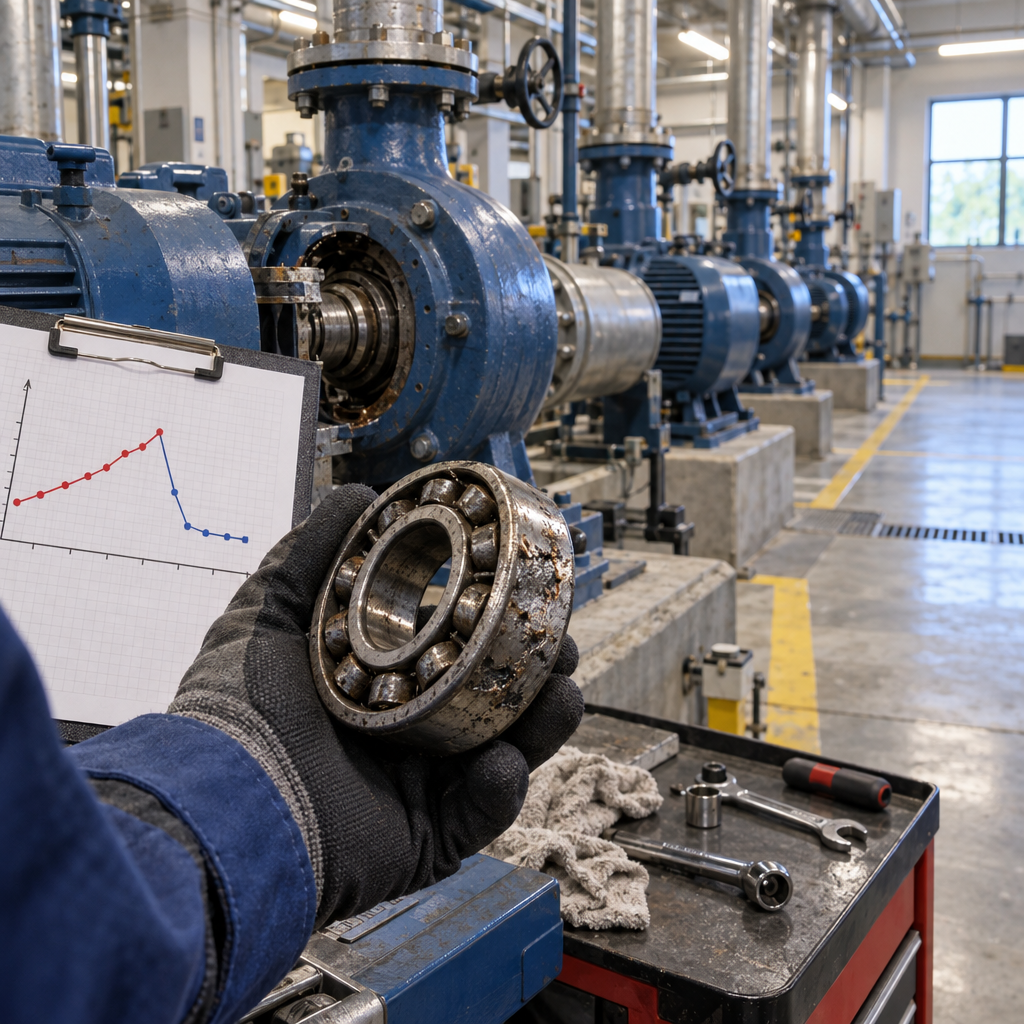
A bearing replaced before seizure leaves no seizure to photograph. A drain cleared in time may leave no flooded room. Preventive maintenance averts some failures precisely by removing the event that would have made the work look necessary.
Failure delivers evidence: alarms, wreckage, interruption, repair bills.
Prevention often delivers Tuesday.
This creates a peculiar blindness. Silence can mean that danger was small. It can also mean that someone found the loose connection, the thinning wall or the rising vibration before it became an incident. Both possibilities appear in the report as the same number: zero.
We inhabit only one of those histories. The other—the history in which the work was not done—cannot be directly inspected. Success can erase its most dramatic witness.
Then the decision mechanism begins.
A reliable system appears healthy. Healthy systems receive less attention. The maintenance line looks expensive beside an empty column of failures. Cutting it creates immediate, countable savings; the added risk remains uncertain and belongs to the future.
The system may not protest immediately. A missed inspection does not instantly crack a pipe. Equipment can continue through remaining tolerance, favorable conditions or plain luck. The lag may last days or years. For a particular component, failure may never occur.
That quiet interval can be mistaken for proof that the cut was harmless.
When deferred work addresses a real failure mode, however, postponing it raises future risk. How much and how soon depend on the system. If failure eventually arrives, emergency spending becomes self-evidently necessary while the earlier work that might have reduced the risk is remembered as optional.
The system has converted success into neglect, and neglect into evidence for rescue.
Not every quiet system is secretly endangered. Not every maintenance task deserves protection. Schedules can become stale, inspections can become ritual and work can continue after its original purpose has disappeared. The answer to counterfactual blindness is not a blank check for upkeep.
It is a better ledger.
Imagine requiring each maintenance task to name the failure mode it addresses and the evidence that the intervention changes relevant conditions. Record defects found before failure, changes in condition, overdue work, recurring faults and performance after intervention. Use comparisons where they are possible. Mark uncertainty where they are not. Establish inspection and replacement thresholds before a long quiet period makes every precaution look foolish.
Such a ledger would not pretend to count disasters with certainty. It would make the mechanism visible enough to judge prevention without waiting for catastrophe to certify it.
The best maintenance may leave no monument. Its evidence is a machine still turning, a room still dry, an ordinary Tuesday.
An ordinary Tuesday is not proof by itself.
But neither is it nothing.