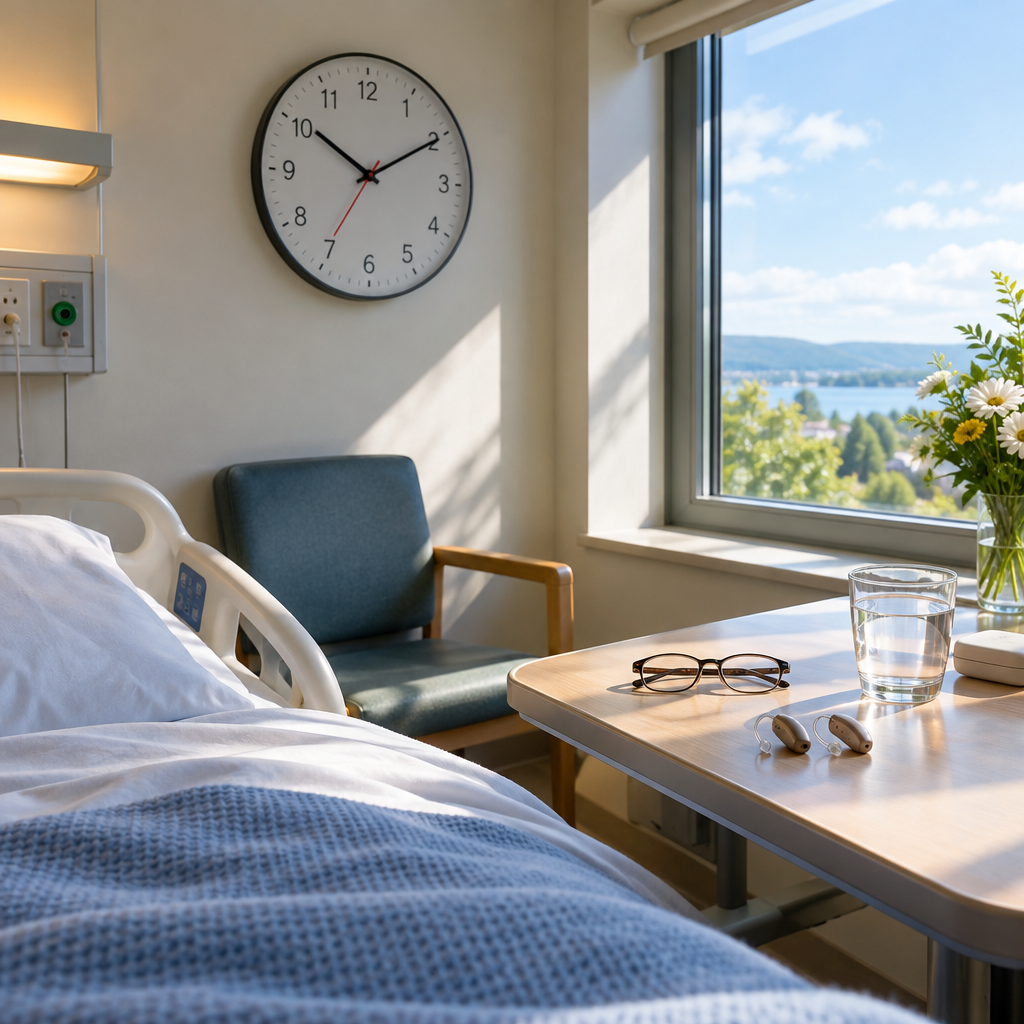
The hands of the clock tick silently. Without glasses, time blurs into a soft halo on the wall.
In a quiet drawer, the hearing aids rest, and every conversation is a murmur without definition. The blinds shield the room from glaring sunlight, offering fragments of sleep between the disruptions of alarms and observations.
For patients susceptible to delirium, these aren’t mere inconveniences.
Delirium emerges from a constellation of factors. While severe illness and medication can be primary drivers, the environment isn't a passive backdrop. Hospital settings that interfere with sleep, movement, vision, hearing, and a sense of place can exacerbate risk.
Picture a ward attentive to these realities. A clock large and legible, a calendar marking the day and place, glasses and hearing aids within easy reach. Natural light to signal daybreak, and restful darkness at night, with reduced interruptions allowing longer, undisturbed sleep. Patients, when able, are encouraged to move, stepping beyond the confines of their beds.
In this vision, these elements become as crucial as medical instruments, anchoring patients to the world around them.
Research in older patient populations shows that a multi-pronged approach integrating these measures can lower delirium incidence. Yet, as these interventions were combined, it's unclear which aspect drives the most benefit. The impact may vary across individuals and environments.
Nonetheless, while an adaptive environment can lower some risks, it doesn’t eliminate the need for immediate medical evaluations when confusion arises.
Hospitals may not avert every case of delirium. But they can strive not to obscure the path back to clarity.