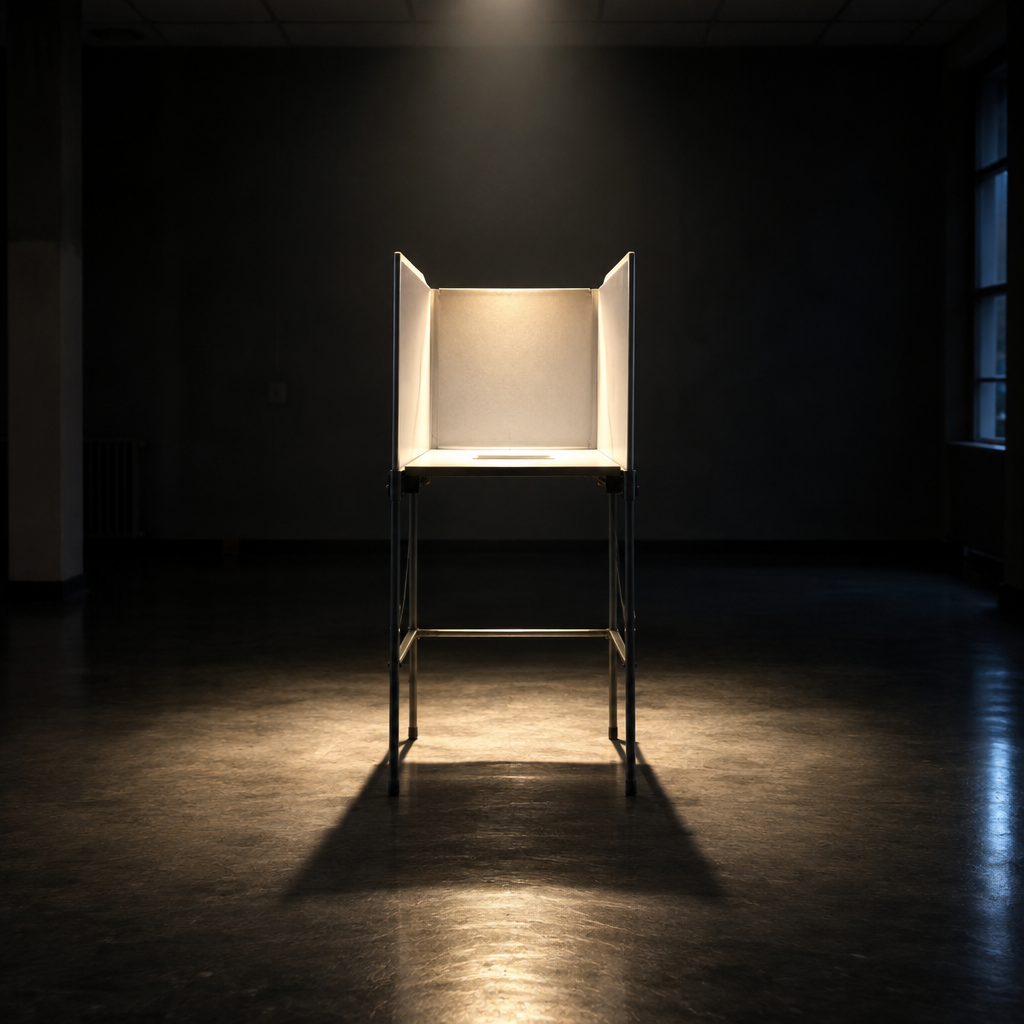
The booth is lit. The room around it is not. No voter or result is visible—only the place where a private mark becomes part of a public decision.
When people question an election result, doubt alone does not prove that anything went wrong. But voting should not make questions disappear. Trust cannot be commanded; it has to meet public questions with transparency and accountability.
Concern can become a demand to understand how a result was reached, to make participation meaningful, and to press for changes that could strengthen future elections. That path is possible, not automatic. Disappointment can lead to withdrawal as readily as to civic action.
The light cannot tell us whether an election was fair. It marks where the question belongs: in the open, before a public able to ask—and a process expected to answer.