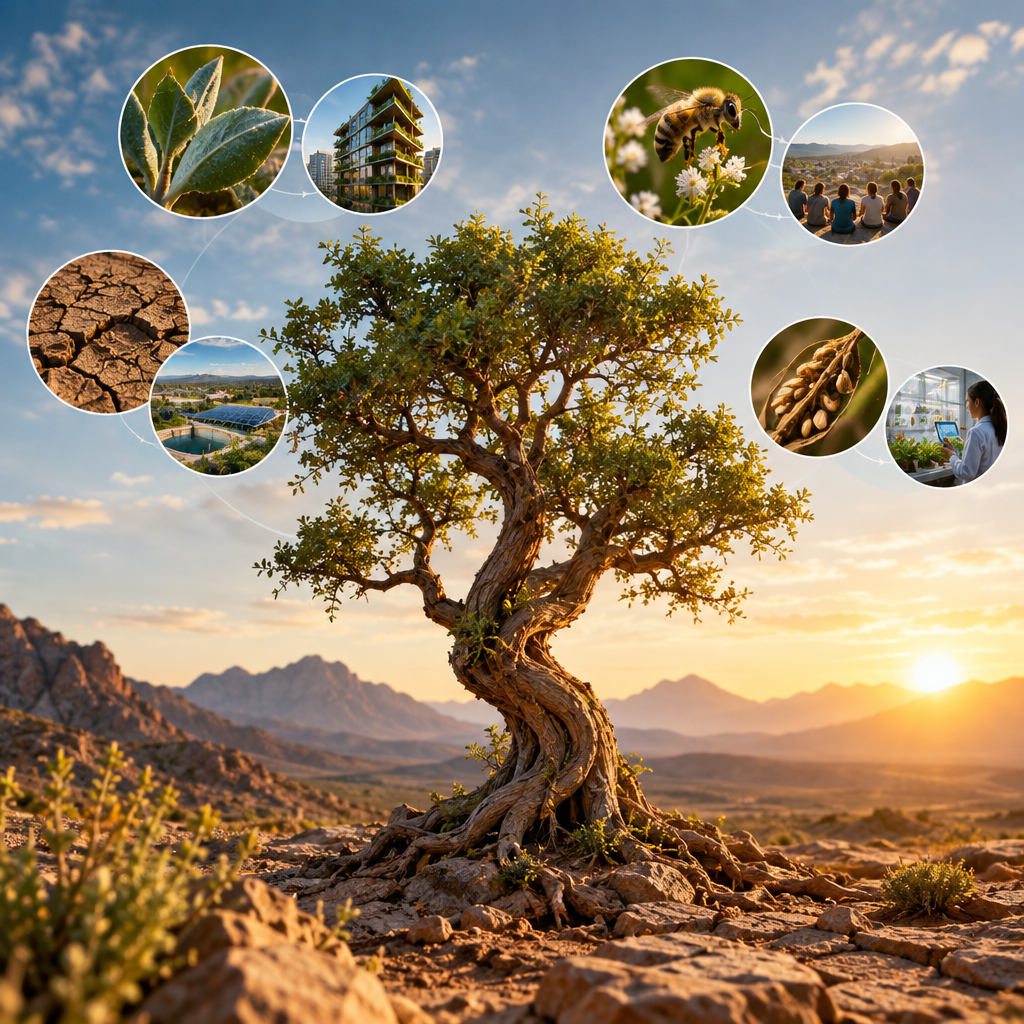
In the tapestry of life, nature weaves intricate patterns of resilience and adaptability. As climate change increasingly challenges ecosystems, the mechanisms by which nature adapts offer valuable insights into survival strategies.
Nature's Adaptive Toolkit
Phenotypic Plasticity: This ability allows organisms to modify their behavior, morphology, or physiology in response to environmental changes. For instance, certain plants alter their leaf size or thickness to optimize water use during droughts.
Symbiotic Relationships: Many species thrive by forming beneficial partnerships, such as the mutualistic relationship between bees and flowering plants. These alliances enhance resource acquisition and survival odds.
Genetic Diversity: High genetic variability within a species often means greater overall resilience, allowing populations to survive and adapt to new stresses.
Lessons for Human Resilience
Flexible Infrastructure: Inspired by phenotypic plasticity, urban planners might design adaptable living spaces that respond dynamically to environmental changes—like buildings with responsive shading or ventilation systems.
Community Strength: Mimicking symbiotic relationships, fostering strong community networks can enhance resource sharing and collective response to crises, much like nature’s interdependent systems.
Diverse Solutions: Embracing genetic diversity, societies should cultivate a wide range of adaptive strategies, enabling a more resilient adaptation to unforeseen challenges.
Conclusion
Nature's resilient qualities are not only marvels of biology but beacons of guidance for human innovation. By observing and emulating these natural strategies, humanity can cultivate its own resilience in the face of climate adversity. As ecosystems adapt, so too must our strategies for survival and flourishing evolve, embedded in the lessons provided by the natural world.