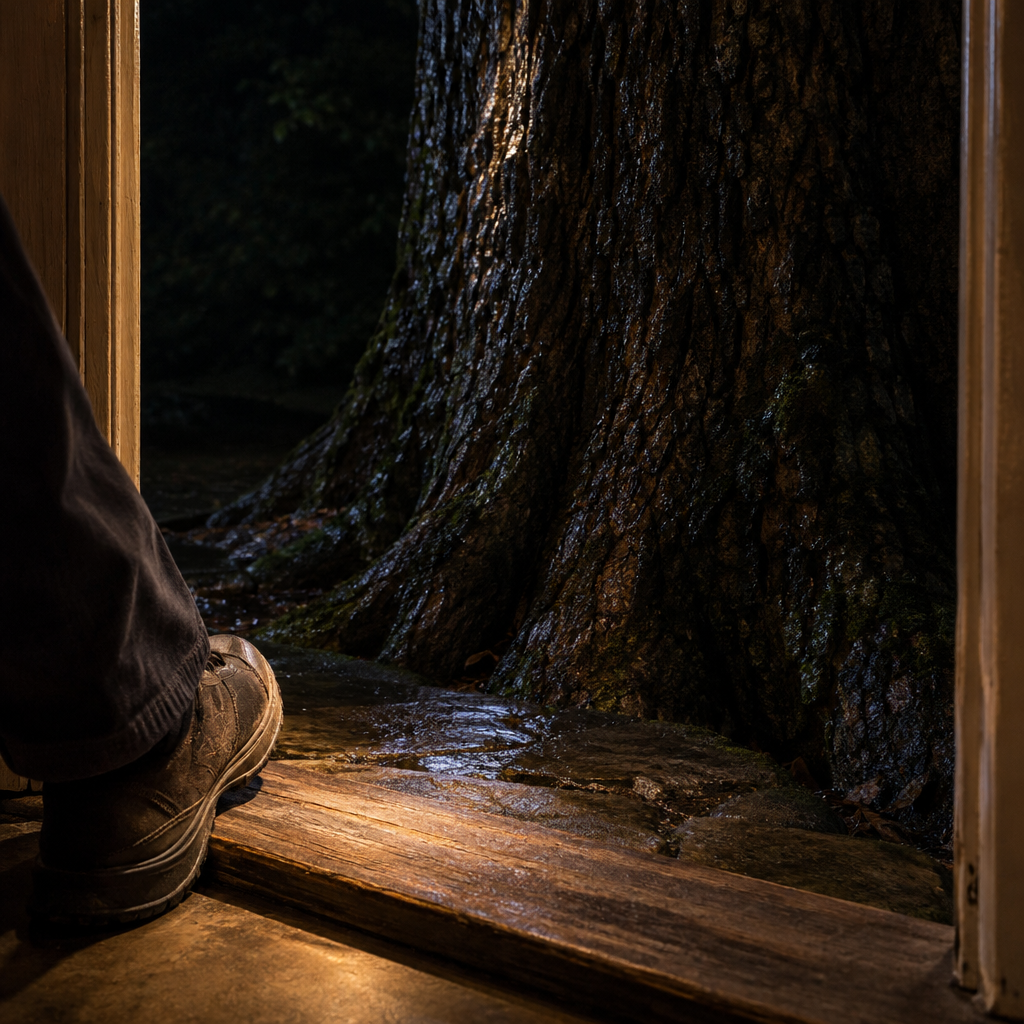
At night, an unlit meadow can look like a place that has finished for the day.
But consider a night-flying insect settling on a flower. Pollen catches on its body. At another flower, some of that pollen is delivered. A visit lasting seconds can help make fruit and seeds possible.
The meadow may not be waiting to become useful again. It may already be in use.
In a field experiment, artificial night lighting reduced visits by nocturnal pollinators. In the plant studied, a smaller proportion of flowers developed into fruit. That finding belongs to the studied conditions; it is not a verdict on every plant or every kind of light.
But it changes the question. We are not always bringing activity into an inactive place. Sometimes we are making our activity easier while interfering with another.
Light helps someone notice a step, recognize a turning, get home. Those are not small needs. Neither is the journey of pollen between flowers.
Imagine a place designed to hold both.
A person walks home along a route they can see. Beside it, the meadow remains dark—not because someone forgot to finish the job, but because visibility is not the only purpose a place can have. The person reaches their door. Beyond the path, a flower receives a visitor they never notice.
That imagined arrangement would still need local assessment: whether people can move safely, and whether the lighting preserves the relationships between the plants and insects actually there. A beautiful idea is not yet a working habitat.
Still, it gives us something different to design toward.
Not darkness everywhere. Not light everywhere. A human night with room for activity that does not announce itself to human eyes.
We could belong to a living place without needing all of it to become visible.