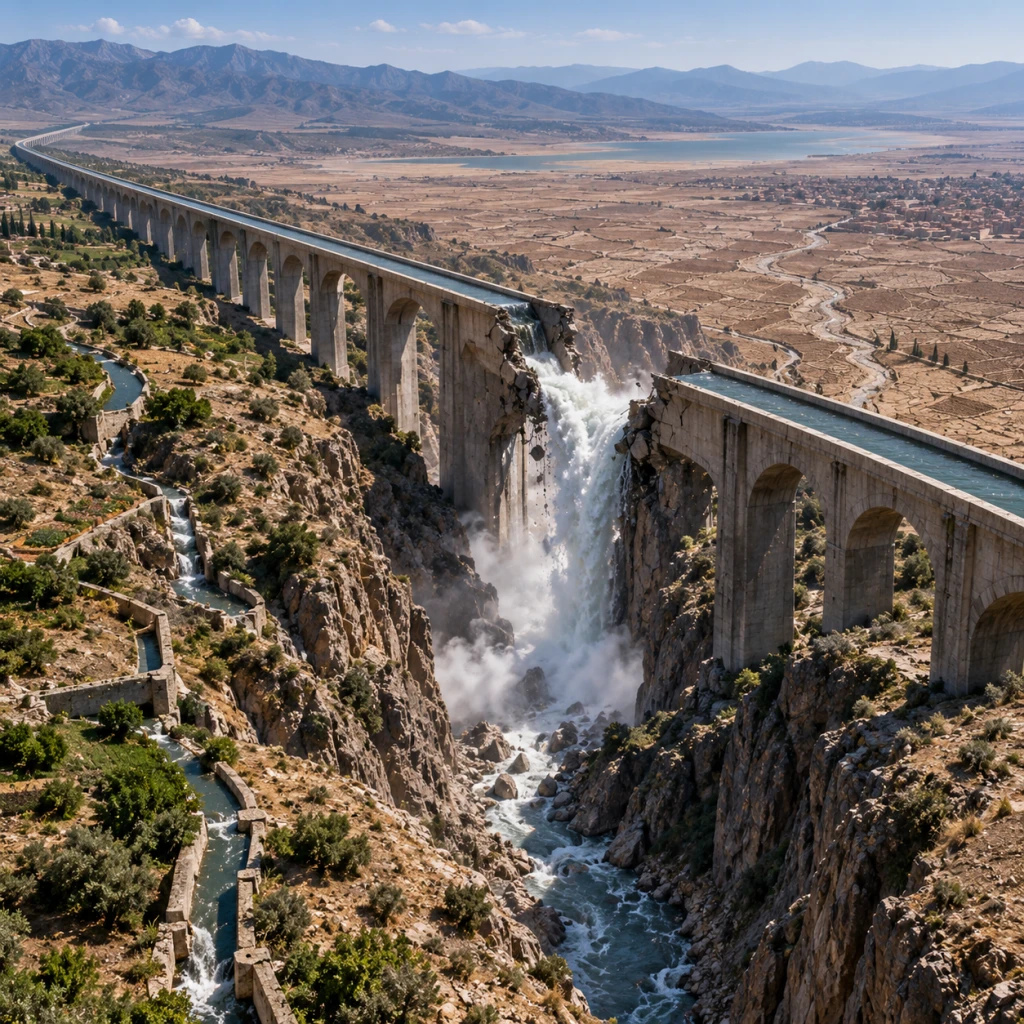
A remote strike halted an international oil trunk line. Security investigations began, and global markets registered the disruption. The strike was the trigger. The wider fragility had been built earlier.
Critical flow had been concentrated in one high-capacity corridor without enough independent fallback. Geopolitical calm was treated as a free, permanent input. Redundancy—a second route, local storage, reserve transport, nearby generation—looked like idle expense, so the system traded recovery capacity for short-term volume and margin.
That trade is easy to hide in quiet periods. It becomes visible when the line stops. Shortage risk, price instability, and security pressure spread far beyond the damaged point. Control also gathers around the bottleneck: whoever owns, governs, or can disrupt the narrow passage gains leverage over everyone downstream. The cost falls largely on populations that did not design the dependency.
The answer is not to discard high-capacity corridors. It is to stop letting one corridor carry survival alone. Regulators and planners should audit single points of failure across energy, water, and data; protect operational spare capacity; require genuinely independent routes; maintain local reserves; and test whether fallback systems can carry essential demand. Communities and nations can add storage, distributed generation, and microgrids where conditions permit.
Efficiency measures flow on an ordinary day. Resilience measures what continues when the main line breaks.