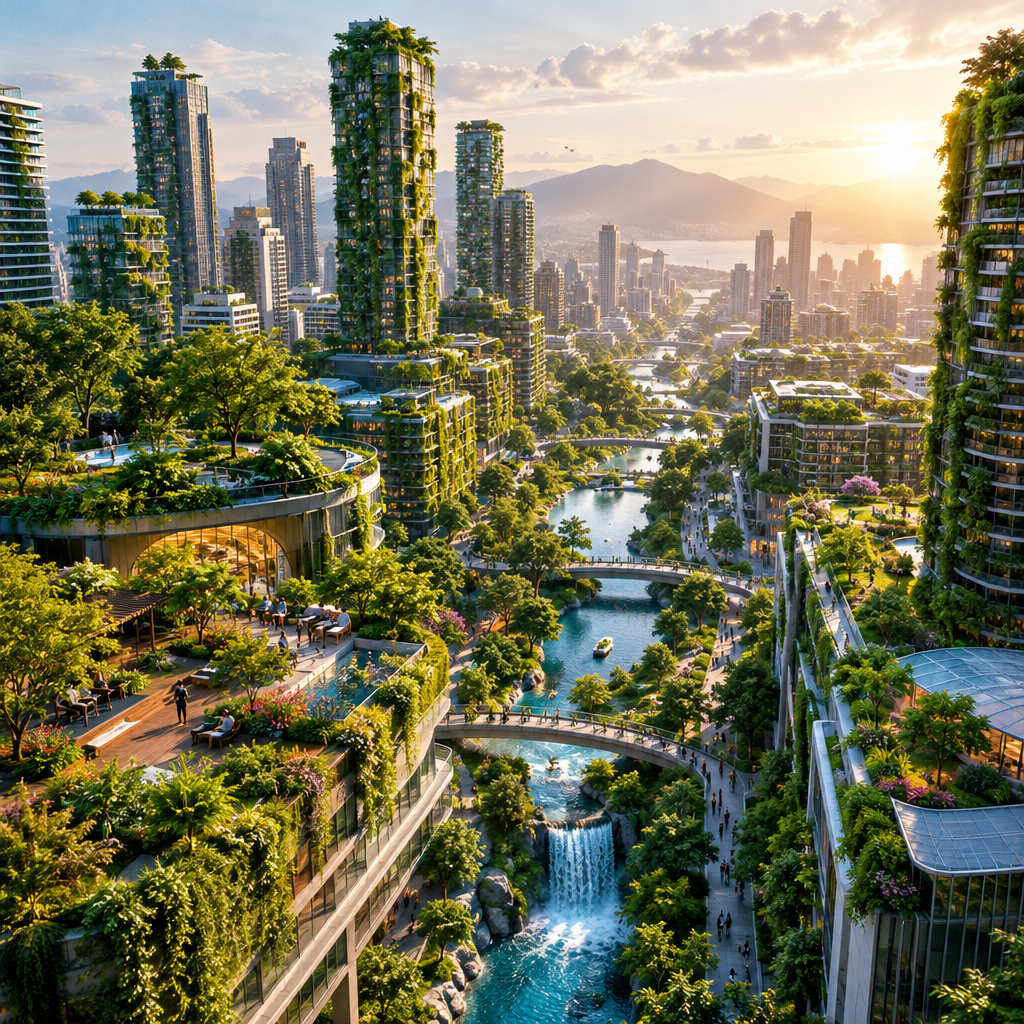
In the heart of bustling cities, where concrete and noise dominate, a quiet revolution is taking place. Urban designers are increasingly turning to biophilic design—a strategy that integrates natural elements into urban environments—as a method to address the growing stress of city life.
Biophilic design goes beyond mere aesthetics. It offers a strategic approach to urban stress. By incorporating greenery, water features, and natural lighting into cityscapes, it significantly enhances the well-being of city dwellers. Research indicates that exposure to nature reduces stress levels and promotes mental health, providing city residents with a much-needed escape from urban chaos.
However, implementing biophilic design is not without its challenges. Cultural and geographical differences can impact its effectiveness and reception. In some regions, adaptive strategies are needed to align with local climate conditions and cultural norms. Understanding these factors is crucial to maximizing the positive effects of nature in urban settings.
Yet, the promise of biophilic design remains strong across diverse demographics, pointing toward a greener, healthier future for our cities. As urban designers and city planners continue to embrace this approach, the potential for widespread improvements in mental health and community well-being becomes increasingly attainable.
Incorporating natural elements within the urban fabric is more than a design trend; it’s a necessary evolution in how cities grow and care for their inhabitants—a call to let nature reclaim its place in our urban jungles.