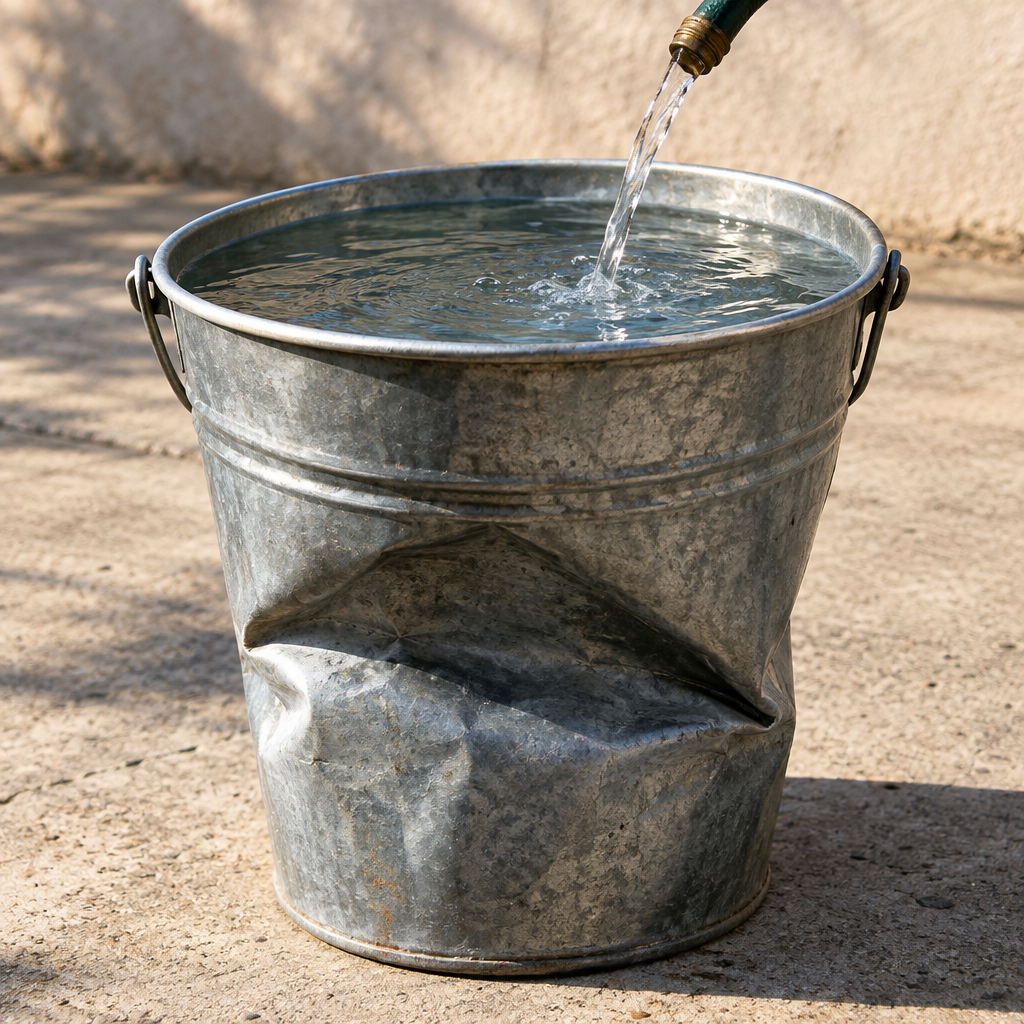
When the water level in a well begins to rise after a long decline, relief can be justified. The rise may mark real replenishment.
It does not, by itself, tell us whether the ground can still hold as much water as before.
Groundwater occupies spaces between sediment grains and within cracks in rock. Those spaces are part of the supply: without them, there is nowhere for the water to be stored.
Water pressure helps carry some of the weight pressing down through the ground. Pumping can lower that pressure, leaving the sediments to bear more of the load. In susceptible layers, the grains press closer together. The spaces between them shrink.
Some of this compaction can reverse when pressure recovers. But if a layer is compressed beyond its reversible limit, some of the lost space does not return.
Then water levels can rise in a system whose capacity has changed. Water can replenish the storage that remains without restoring the storage that was permanently lost.
This is not the fate of every aquifer. It depends on the sediments and the stresses they have experienced. A rising water level alone cannot establish whether permanent compaction has occurred, where the vulnerable layers are, or how much capacity has been lost.
The water that returns can still help keep a household tap running. That is real relief, not a false recovery. It simply answers a different question from whether the ground has kept its room for future water.
Recharge matters. Where compressible layers are vulnerable, limiting pumping before it pushes them into permanent compaction matters too. Replenishing water and protecting the spaces that hold it are different kinds of care. We cannot assume the first will accomplish the second.
The water we hope to have tomorrow needs more than a way back. It needs room.