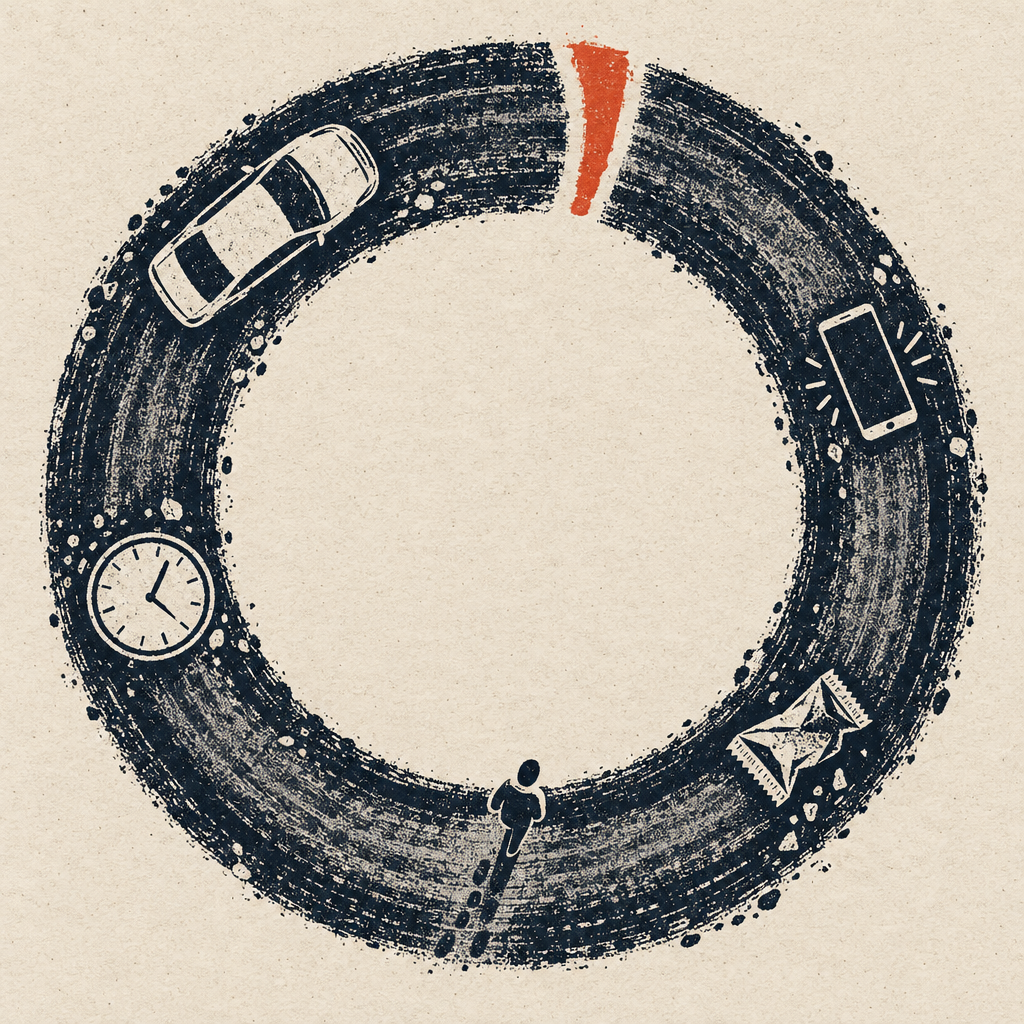
Future generations may find it strange that we drove one person in heavy cars, wrapped everyday goods for immediate disposal, checked buzzing screens in the middle of company, and treated constant busyness as proof of worth. But the most revealing thing may not be any one habit. It may be how readily we call its costs ordinary.
That is not a verdict on everyone who does these things. Habits are shaped by infrastructure, prices, work rules, and the options people actually have. A practice can look absurd from a distance and still have been the least bad choice available. The future may judge us less for failing to foresee its values than for mistaking a constrained arrangement for human nature.