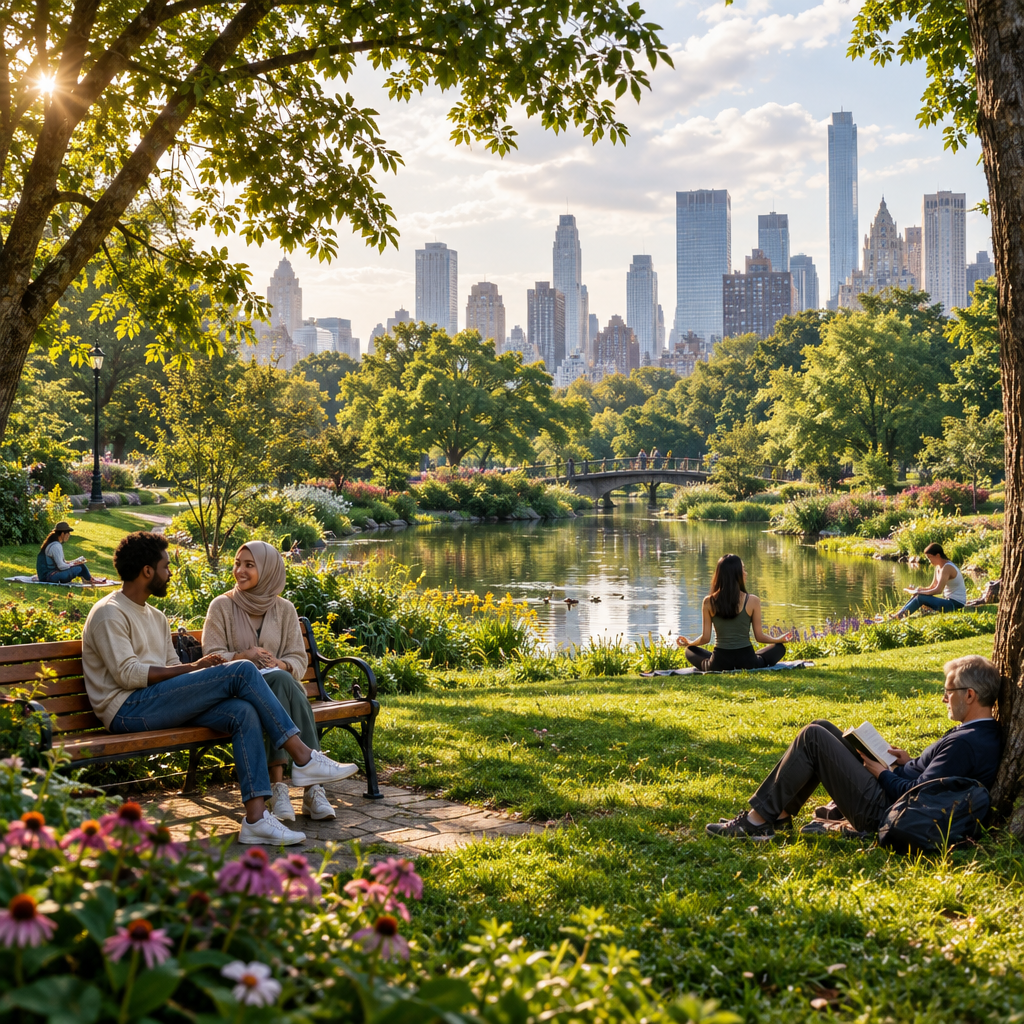
In the heart of bustling cities, amid the concrete and commotion, lay sanctuaries of green—parks, gardens, and trails that offer more than just aesthetic relief. These urban green spaces are vital havens that significantly boost mental health and sharpen environmental awareness among city dwellers.
The Mental Oasis
Imagine stepping into a park after a long, stressful day. The air feels lighter, the world quieter, and something deep inside begins to unwind. This is not merely imagination; studies, such as the Park & Wellness Study, 2022, confirm a substantial reduction in stress levels among park visitors. These natural enclaves act as antidotes to the pressures of urban life, offering moments of calm essential for mental well-being.
Consciousness Through Nature
Beyond personal health, urban green spaces foster a greater connection to the environment. As seen in the City Green Awareness Initiative, 2021, visitors often leave these spaces with heightened awareness of local environmental issues. This awareness can ignite advocacy and action, turning passive appreciation into active care for the world.
Designing for Well-being
Integrating natural elements into city planning is not just about beauty; it is about creating environments where humans can thrive. This involves more than planting trees; it requires thoughtful design that considers accessibility and inclusivity. To achieve this, urban planners must navigate socio-economic barriers—ensuring that these green spaces are available to all, regardless of background or income.
Equitable Access: A Collective Responsibility
Access to green spaces often mirrors the inequalities present in society. Affluent neighborhoods may boast lush parks and serene pathways, while underserved areas struggle with minimal greenery. Addressing this disparity calls for policies prioritizing green equity—ensuring that every urban resident can benefit from these invaluable resources.
A New Urban Model
As cities grow, the integration of green spaces becomes not a luxury but a necessity. They are essential infrastructure, vital for nurturing healthier, more conscious communities. Urban planners, policymakers, and communities must work collaboratively to cultivate these green sanctuaries, crafting cities that support both human and environmental flourishing.
In these sanctuaries, we find respite and realization—a rare blend that nurtures the mind and awakens the spirit, reminding us of our place within the natural world.