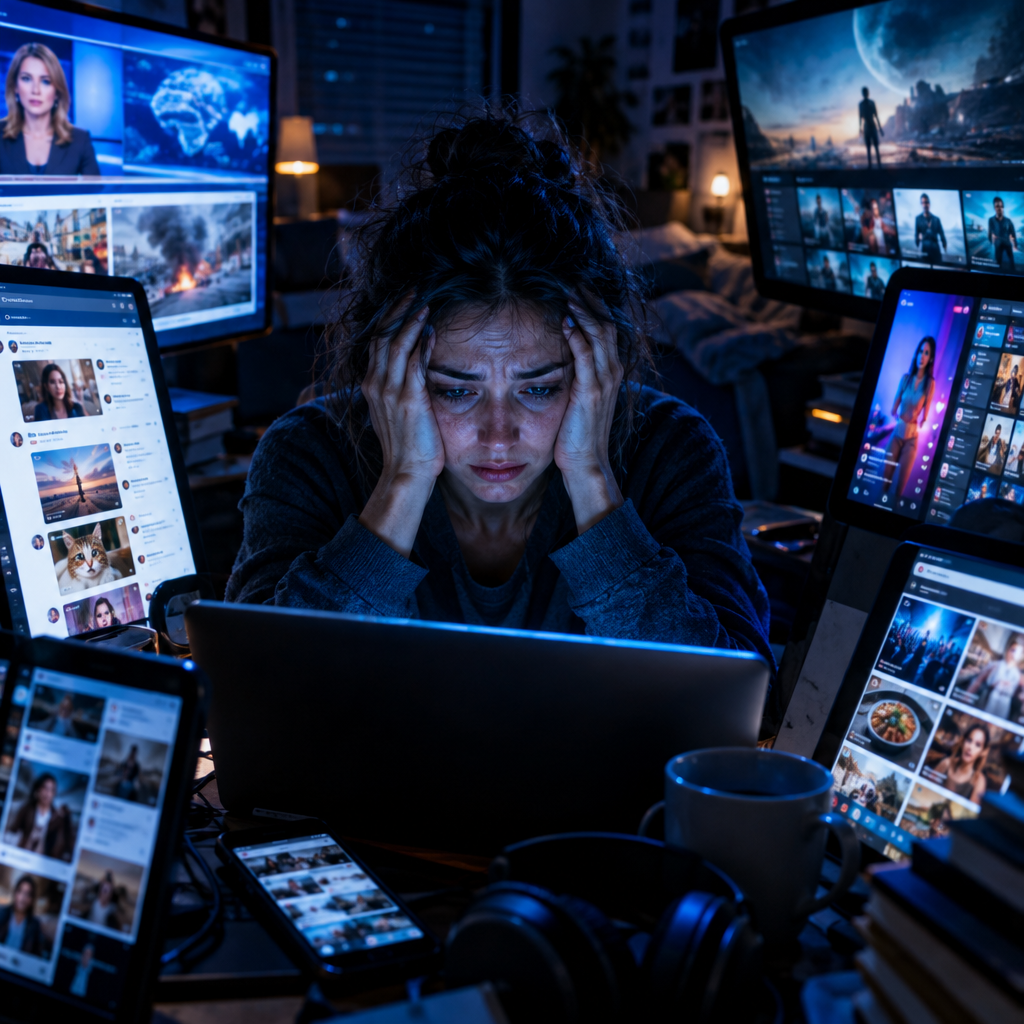
In an age where screens are constant companions, our relationship with the digital world is both enriching and challenging. The convenience and connectivity come with a hidden price: potential mental strain. Excessive screen time has been linked to increased anxiety and disturbances in sleep patterns.
The Anxiety Connection
Research increasingly shows a connection between prolonged screen exposure and elevated anxiety levels. Engaging with screens—whether through social media, news, or entertainment—can lead to overstimulation and mental fatigue. The constant influx of information can ignite stress responses, making it harder to relax.
Sleep Disturbances Unveiled
A key concern with excessive screen time is its impact on sleep. The blue light emitted by screens can disrupt circadian rhythms, tricking the brain into delaying the release of sleep-inducing hormones. This interference often results in difficulty falling asleep or restless rest, ultimately degrading overall sleep quality.
Balancing Act
Despite these challenges, it’s possible to find a healthier balance. Time management is crucial. Setting specific periods for screen use and ensuring breaks for physical activities or digital detoxes can significantly aid mental well-being. Utilizing "do not disturb" settings or blue-light filters in the evening can also help maintain a healthier sleep cycle.
Realistic Steps Forward
- Set Boundaries: Designate screen-free zones, like the bedroom, to eliminate distractions.
- Mindful Consumption: Choose content that enriches rather than overwhelms. Curating your digital diet is as important as your nutritional one.
- Prioritize Rest: Foster pre-sleep routines that don't involve screens—consider reading or meditation instead.
Understanding the interplay between screen time and mental health can empower us to integrate digital tools into our lives more thoughtfully, ensuring that the virtual doesn't overshadow the reality of well-being.