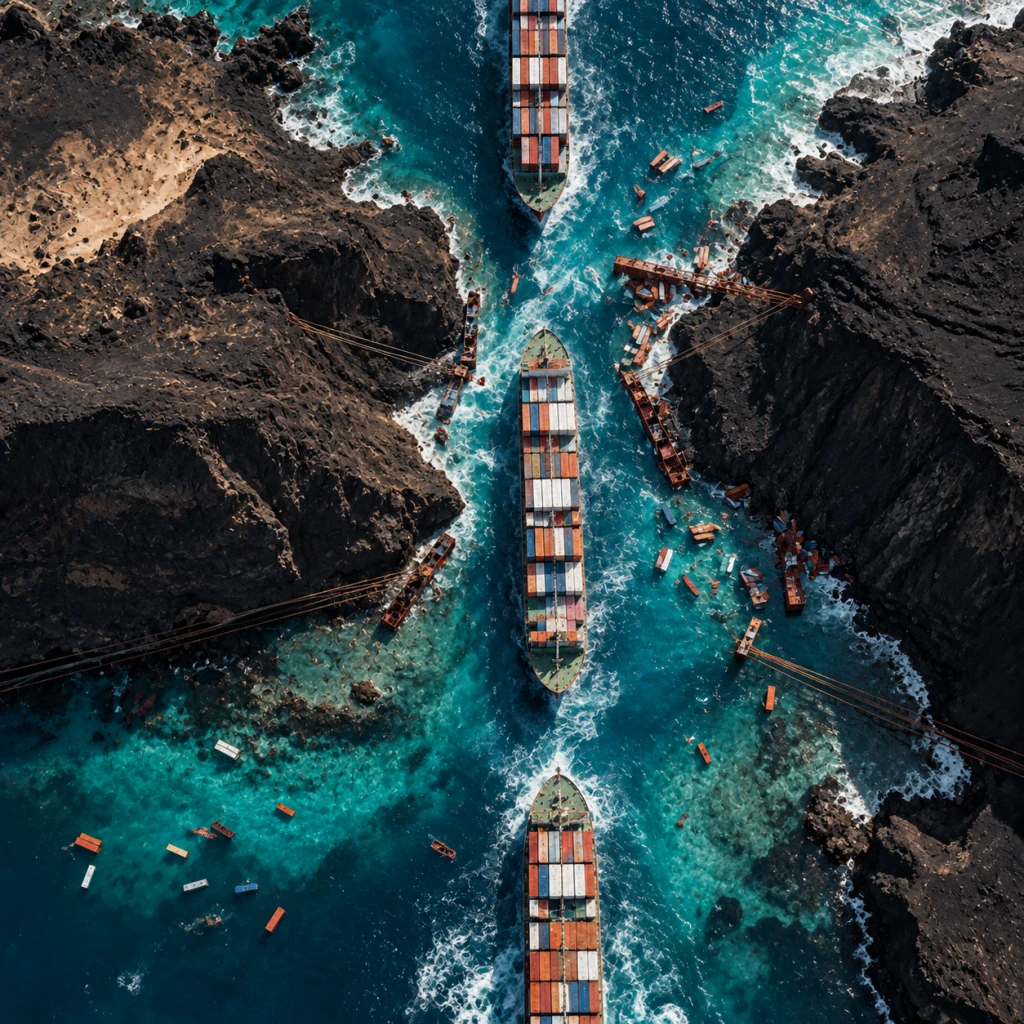
The ocean is not frictionless. Every shipping corridor passes a shore.
Commercial trade often treats safe passage as a permanent background condition. But sea lanes are physical routes embedded in local political and economic realities. When conflict weakens public authority, poverty deepens, and enforcement withdraws or moves elsewhere, armed groups can turn passing vessels into revenue.
Piracy is not one thing, and no single cause explains every attack. Yet inside a governance vacuum, coercion can become an economy: ships or crews are seized, payment is demanded, and geography becomes leverage.
Shipping companies respond with detours, higher insurance costs, and armed protection. Those expenses do not remain at sea. They move through supply chains until businesses and consumers absorb the bill.
Naval patrols may suppress attacks, but patrols alone cannot repair the conditions producing them. Durable security requires both immediate protection and longer work: diversified trade routes, stronger coastal economies, and legitimate local capacity that reduces the power and appeal of extraction.
The fracture is not simply between lawful ships and lawless shores. It lies in a system that depends on coastal stability while treating the coast as someone else’s responsibility.
No sea route is safer than the human ground beside it.